Céline Decarpigny: The Architect of "Patient Relations" at Pierre Fabre
Meet Céline Decarpigny, who turns 'Patient Centricity' into concrete action at Pierre Fabre Laboratories.
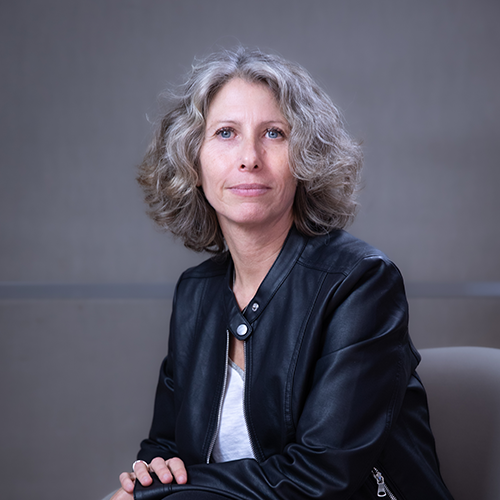
At Pierre Fabre Laboratories, "Patient Centricity" is not an abstract concept, it has a face: that of Céline Decarpigny. Head of Patient Relations at the French subsidiary for the past three years, she embodies a role that has been transformed. Far from the image of mere "charitable support", she leads projects in which clinical expertise and patients' lived experience come together to improve the care pathway.
A role that is redefining standards
"Patient Centricity". Everyone is talking about it, but what does it mean day to day? For Céline Decarpigny, it means above all "Patient Relations". Her role is not only to listen, but to build solutions with and for patients to meet needs that medication alone does not cover.
She is not alone in this approach. As the November 2025 survey by the magazine Pharmaceutiques points out, the whole industry is shifting towards a "Value Partnership" model. While other players such as Takeda are also structuring this approach (we recommend the Pharmaceutiques article for a full overview of the sector), Pierre Fabre Laboratories hold a unique position, as a major player in both dermo-cosmetics and oncology. This expertise makes it possible to care for patients through a three-pronged approach of prevention, treatment and support, including the management of treatment side effects.
"Act for Skin": A comprehensive answer to an everyday need
It is with the "Act for Skin, Care for Cancer Patients" project that this vision takes on its full meaning. It is an international programme whose mission is to support healthcare professionals and patients in oncology in preventing and managing the skin effects of cancer treatments.
The figures speak for themselves: 59% of patients say that skin problems affect their daily lives, and 93% have to change their skincare routine during treatment. Yet, in practice, information does not always flow easily between dermatologists and oncology healthcare professionals.
To roll out this major project in France, Céline Decarpigny is taking a rigorous approach involving an internal team of around ten people (spanning oncology, dermo-cosmetics, medical, digital and communication), mobilised to ensure synergy between functions. The first objectives for 2026 will be to identify unmet needs at each key stage of the care pathway, then to co-construct solutions with patient associations and healthcare professionals.
An approach based on co-construction
Beyond this flagship project, Céline Decarpigny is multiplying targeted initiatives, proving that support is played out on every front and requires a long-term commitment.
- On prevention: She led the creation of a Happy Families card game on sun protection. Co-designed with the association France Assos Cancer et Peau, this fun resource has already been distributed in nearly 500 copies through associations and the laboratory's events. A wider distribution is now being considered by the association.
- On rare diseases: Faced with the lack of information on Epstein-Barr virus-positive post-transplant lymphoma, she helped create a dedicated website. A necessary investment to provide a reliable resource where information on this rare disease (a few dozen people affected each year in France) was almost non-existent.
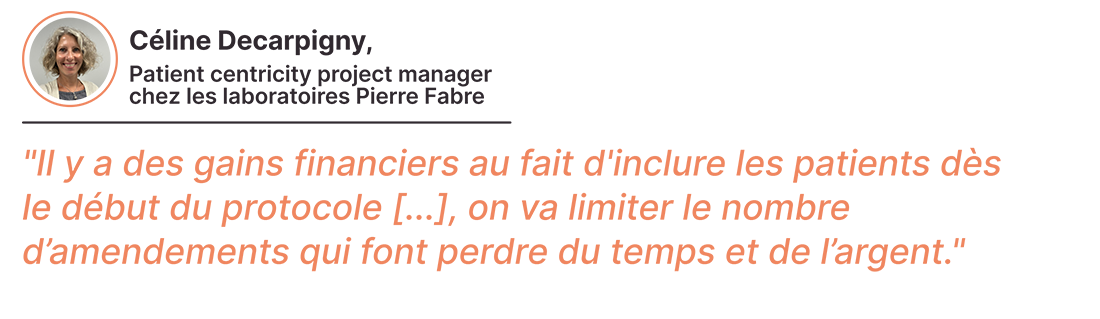
For Céline, patient engagement goes beyond brand image. It is a lever for efficiency. She points out that having patients review clinical protocols upstream helps avoid later amendments and makes recruitment into trials easier.
The Vision: The patient as a partner in clinical performance
Her conviction for the future? Success depends on a balanced working trio: pharmaceutical company, patient association and expert physician.
Jinko's view
Céline Decarpigny's work perfectly illustrates the mission we have set ourselves: creating the human connections that strengthen the care pathway. She identifies needs and initiates dialogue within this trio of experts. Our role is to support this momentum by industrialising the roll-out of these supportive care pathways. We structure interactions so that educational resources and caregivers' expertise are available at the right time, for both the patient and their medical team.
Sources:
- On the Act for Skin programme:
- Pierre Fabre article: Oncology: an innovative plan to improve patients' quality of life
- On the transformation of the pharmaceutical sector:
- Pharmaceutiques (no. 331, November 2025): "Patients and healthcare companies: an essential partnership", survey by François Silvan.
- On the ROI of patient engagement (study cited for context):
Satisfied patients and doctors
“Jinko is my new haven of peace.
The kindness, the listening, the care, the follow-up, the practitioners… The nurses are very attentive, always ready to help, to improve the follow-up and adapt it. Jinko helps me every day: I have been able to take up (adapted) physical activity again and take back control of my body.
Thank you to the whole team who welcomed me into the care pathway.”
“Jinko is a precious, essential and beneficial resource for anyone living with cancer or in remission. The care pathway offered is tailored to my needs, I discovered new therapies, and the network of selected practitioners is of very high quality: attentive, empathetic, supportive, caring… Thank you to the whole Jinko team for your commitment, your support, your humanity and the strength you give us!”
“Jinko was a precious support for me during my cancer treatment, filling the gaps that often exist in medical follow-up. The team stands out for its empathy, compassion and commitment to supporting patients in every aspect of their lives, during and after treatment. Thank you to Sophie and the whole team for their exceptional humanity and unmatched availability.”
“Jinko works hard to understand patients’ needs as closely as possible and knows how to support them at the right time, in the right way. Doctors need people to take over from them, and it is a very good thing that Jinko has taken this initiative.”