Institutionalising Value: Why Takeda created a "Value-Based Partnership" Department
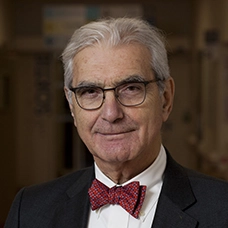
Meet Tania Aydenian: from native co-construction to impact measurement, behind the scenes of a structural transformation.

For a long time, patient experience was an adjustment variable, often diluted between pharmaceutical companies' marketing, medical or CSR departments. That era seems to be over.
The strong signal does not come from a statement of intent, but from a structural reorganisation. Less than a year ago, Takeda France took a decisive step by creating a dedicated entity: the Value Based Partnerships & Digital Health department.
This is no longer philanthropy. It is the industry's recognition that the sustainability of its business model now depends on proving value "beyond the molecule". We explored the challenges of this new strategic unit with its director, Tania Aydenian.
Structuring: The new key to success
The very creation of this unit is the main message. It means that the company now allocates budget, dedicated human resources and specific KPIs to the architecture of the care pathway, just as it does to drug R&D.
The context demands it. Takeda, which is heavily involved in rare diseases, IBD (inflammatory bowel disease) and neuroscience, faces an implacable statistical reality:

As diseases become chronic, the clinical efficiency of a treatment depends on the ecosystem around it. Takeda is not seeking to replace existing players, but to orchestrate the meeting between a system need and a technological solution.

Operational Excellence: "De-risking" through co-construction
It is no longer about "consulting" patients at the end of the process to validate an interface (User Acceptance Testing). The innovation driven by this department lies in native co-construction.
Tania Aydenian stresses this paradigm shift: involving patient associations from day 0 (the genesis phase) is above all a strategy for efficiency and risk reduction. It makes it possible to "pivot" features before they are even developed, avoiding wasting resources on "gadget" tools that will never be used.
A concrete case: Neuroscience & Narcolepsy
In a current narcolepsy project, the team realised that the issue for the patient was not limited to measuring sleep. The real need was about managing a life structured by the disease. Without this initial input from patients, the company would have missed the real value expected.

The Year of Proof: Targeting Data
Clear-sightedness is the order of the day. As the department has been in existence for less than a year, it is not yet time for large-scale figures, but for rigour in implementation.
The roadmap is clear: turn pilot experiments into standards of care. The major challenge in the coming months will be the ability to collect and analyse Real-World Data (RWE), in particular through:
- PROMs (Patient-Reported Outcome Measures).
- PREMs (Patient-Reported Experience Measures).
Tania Aydenian's stated ambition is that within a year, these pilot projects will provide statistical proof that support improves clinical outcomes and efficiency for the healthcare system. In this equation, technology and AI are not ends in themselves, but levers for handling this complexity.
Jinko's Vision: The missing industrial link
The approach Takeda has structured in rare diseases and IBD validates the central thesis championed by Jinko: whether in oncology or chronic disease, the logic remains the same.
While pharmaceutical companies define the strategy and fund innovation through Value-Based units, large-scale operational implementation requires a trusted third-party infrastructure. This is where Jinko comes in, providing the human and digital building block capable of rolling out these pathways and reporting this valuable real-world data.
Patient support is no longer an add-on to medication, but a structural component of therapeutic efficiency.
Sources:
- Grandes Tendances #E-santé 2026 Congress
- Cheminements podcast: "How can we concretely measure the value created for patients?"
- Tania Aydenian as Director of the new Value Based Partnership department at Takeda
Satisfied patients and doctors
“Jinko is my new haven of peace.
The kindness, the listening, the care, the follow-up, the practitioners… The nurses are very attentive, always ready to help, to improve the follow-up and adapt it. Jinko helps me every day: I have been able to take up (adapted) physical activity again and take back control of my body.
Thank you to the whole team who welcomed me into the care pathway.”
“Jinko is a precious, essential and beneficial resource for anyone living with cancer or in remission. The care pathway offered is tailored to my needs, I discovered new therapies, and the network of selected practitioners is of very high quality: attentive, empathetic, supportive, caring… Thank you to the whole Jinko team for your commitment, your support, your humanity and the strength you give us!”
“Jinko was a precious support for me during my cancer treatment, filling the gaps that often exist in medical follow-up. The team stands out for its empathy, compassion and commitment to supporting patients in every aspect of their lives, during and after treatment. Thank you to Sophie and the whole team for their exceptional humanity and unmatched availability.”
“Jinko works hard to understand patients’ needs as closely as possible and knows how to support them at the right time, in the right way. Doctors need people to take over from them, and it is a very good thing that Jinko has taken this initiative.”